
Mini dental implants.
Know their limits.
Mini implants can have a limited role. For replacing a full arch of teeth, our practice generally recommends conventional implants.

Not our first choice
for a full arch.
We do not recommend mini implants as a routine treatment for supporting or retaining an entire upper or lower set of teeth.
A permanent bridge and a removable snap-in denture work differently. That distinction matters when comparing your options.
A bridge that stays in place
A fixed bridge relies on implants for support and is removed by a dental professional. We do not recommend mini implants for a permanent fixed full-arch bridge.
A denture that snaps in
A snap-in denture is removed for cleaning and may also rest on the gums. Conventional implants are our first choice; minis are a limited exception, not our usual full-arch recommendation.
Where the evidence differs: Selected removable lower dentures can be retained successfully by mini implants. That does not make them an equivalent choice for a permanent fixed full-arch bridge. See clinical references
Plan for the bite.
And the years ahead.
The goal is a restoration that suits your mouth and can be maintained over time.
Chewing forces matter
A smaller diameter can increase fracture risk. Implant material, tooth grinding and the way your teeth meet all influence the plan.
The final teeth guide the choice
We assess how the teeth will be supported, how you will clean them and how future repairs would be handled.
Bone loss needs a closer look
A narrow ridge does not automatically mean minis are the only answer. Examination and appropriate imaging help us compare realistic options.
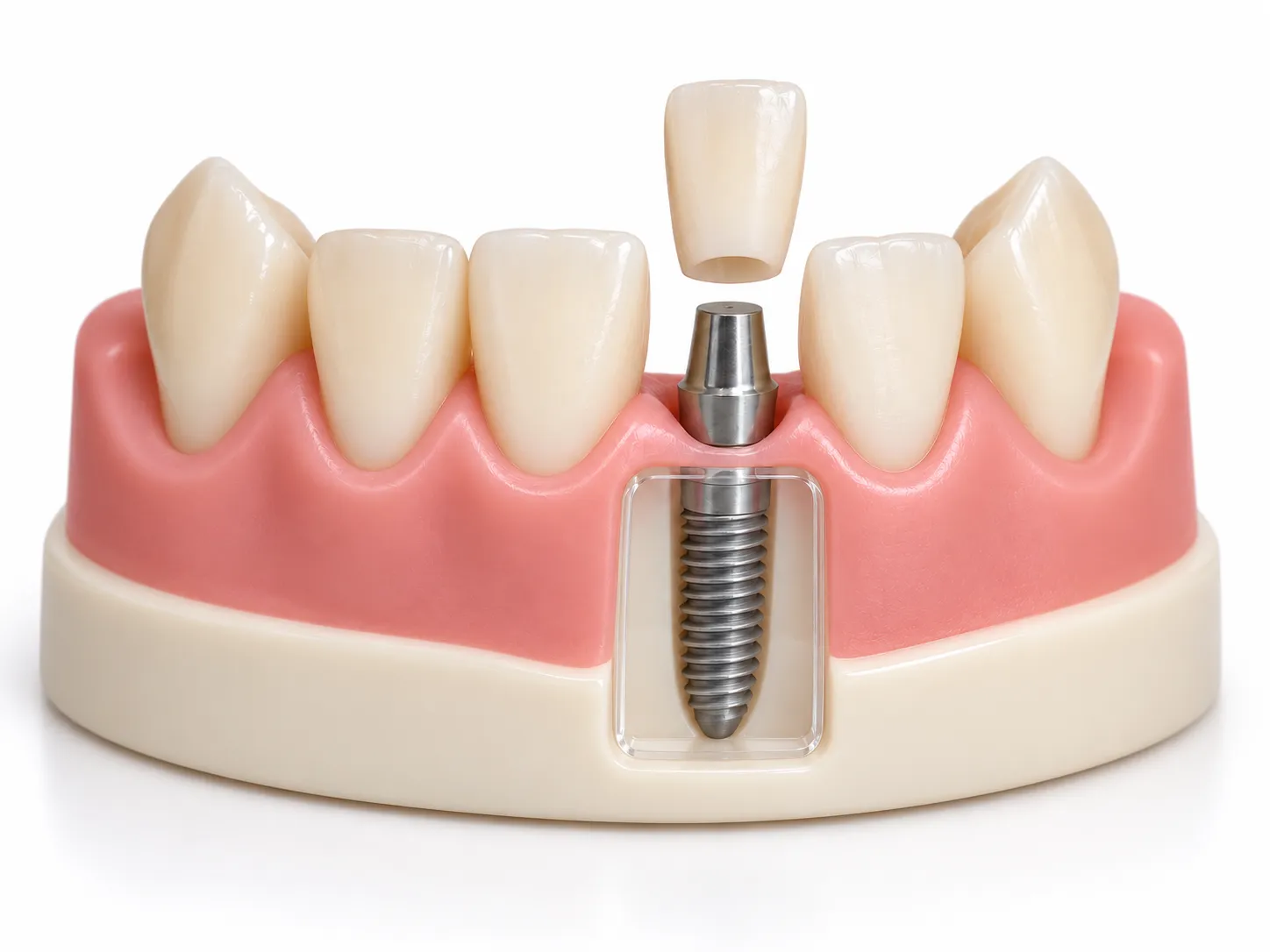
When a smaller implant
may make sense.
A single lower front tooth
A narrow-diameter implant may suit a small space between the lower front teeth. This is not automatically an indication for a true mini implant: the system must be intended for that restoration, with adequate bone and a suitable bite.
When standard treatment is unsuitable
After other realistic options have been explored, a mini implant may be considered for a specific, limited indication. We would explain the compromises and compare non-implant alternatives as well.
“Mini” and “narrow-diameter” are not interchangeable. The exact implant design and intended use matter more than the label.
Start with the teeth you want to replace.
A full arch of fixed teeth
Discuss a bridge supported by conventional implants, including whether an All-on-4® approach fits your needs.
A more secure denture
Compare a removable snap-in denture retained by conventional implants with other denture options.
One missing tooth
Review the available space, bone and bite before choosing an implant or another tooth-replacement option.
Clear answers.
A personal plan.
Does bone loss mean I need mini implants?
No. Depending on your anatomy and health, options may include conventional implants with additional procedures, a different implant plan, or a removable denture. We will explain which options are realistic for you.
Can mini implants replace a single lower incisor?
A small lower-incisor space may be suitable for a narrow-diameter implant. A true mini implant is not automatically the right device for a single crown. We would assess the specific system, bone, spacing and bite before recommending it.
I already have mini implants. Should they be removed?
Not just because they are minis. If they are comfortable, healthy and functioning well, ongoing maintenance may be appropriate. Pain, looseness, fractures or changes in fit should be examined.
Is the least expensive implant the best value?
Initial price is only part of the decision. Ask what the plan includes, how the teeth will be maintained, and what happens if a component or implant needs repair or replacement.
A thoughtful plan starts
with a conversation.
Bring your questions—or a treatment plan you have received. We will help you compare the options for your mouth.
A Downtown Dental Group
1139 Bethel Street · Honolulu
Clinical references
ITI consensus: narrow-diameter implants · Mini implants for removable lower dentures · Narrow implants for selected single incisors
Treatment recommendations depend on an individual examination and the intended use of the implant system.