
Digital dentistry in Honolulu
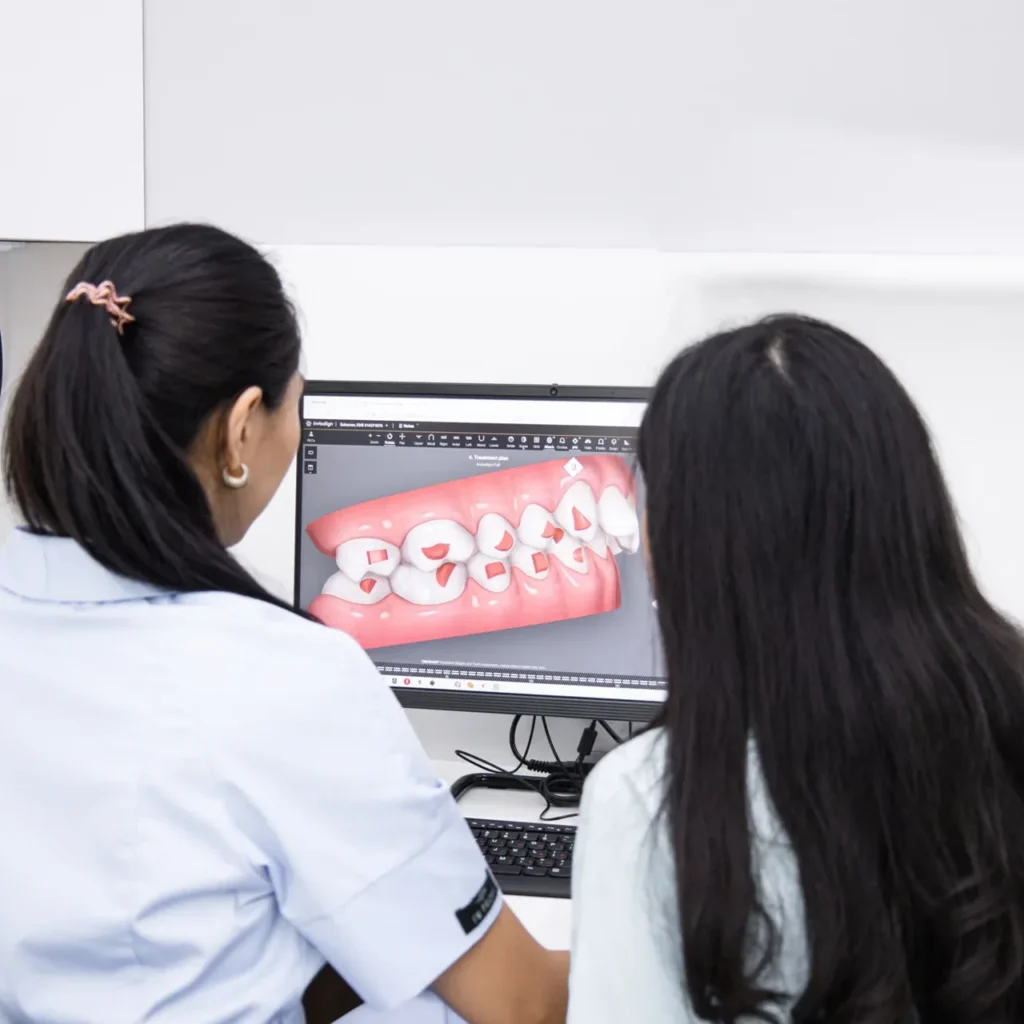
Watch a model of your teeth take shape as we scan. Then sit with your dentist, turn the model around, and see exactly where a crown or replacement tooth needs to fit.
Can you spot the missing back tooth? Look from above to find the gap, then choose the side view to see the teeth on either side. All three images come from the same scan.
At your visit, we can zoom in and turn your own model on screen. If you’ve ever tried to make sense of a back tooth in a little hand mirror, you’ll appreciate the difference.
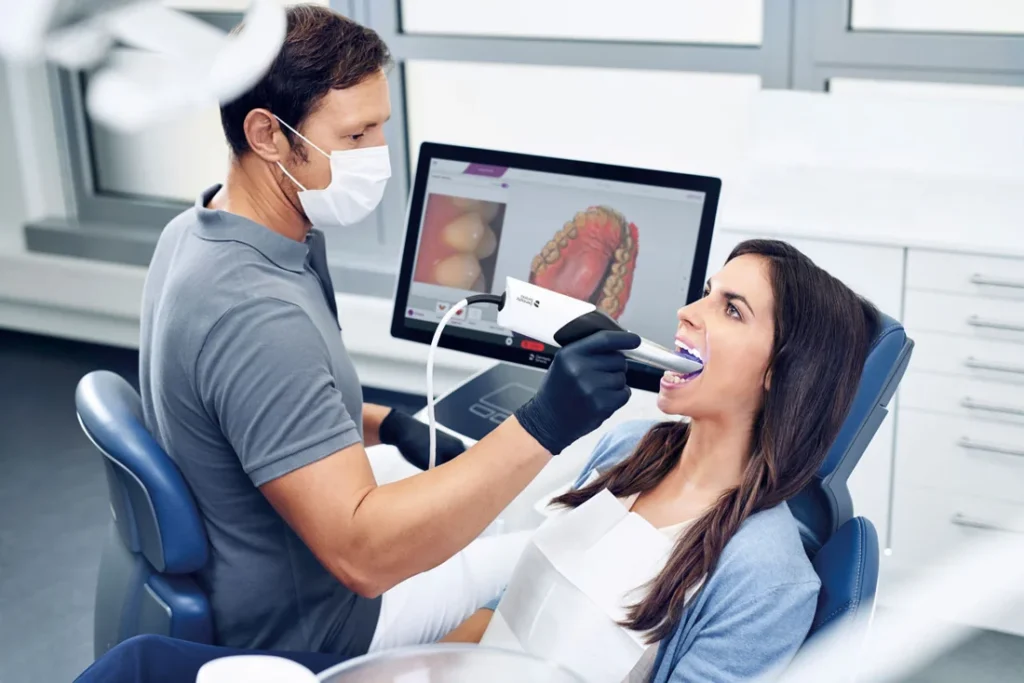
We move a handheld camera along your teeth, then ask you to bite together briefly. For many crowns and other treatments, this takes the place of holding a tray of impression material in your mouth. We can pause if you need a break.
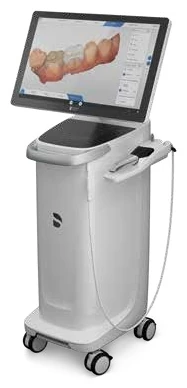
At A Downtown Dental Group, we use the Dentsply Sirona Primescan and the iTero Element Flex. The Flex connects to a laptop and can also capture the records we use to plan clear aligners.
We can enlarge the edge of a tooth prepared for a crown before you leave. If a small area is unclear, we can dry that spot and scan it again. That gives us more control over the detail we send to the lab.
For select single-tooth restorations, we can send your scan directly to our dental lab and have the restoration ready in as little as two days. The lab fabricates it off-site. When you return, your dentist checks the fit and how it feels when you bite.
If you have travel plans or a deadline, tell us at your first visit. We’ll confirm what’s possible for your tooth and the lab’s schedule. Bridges and more complex cases take longer.

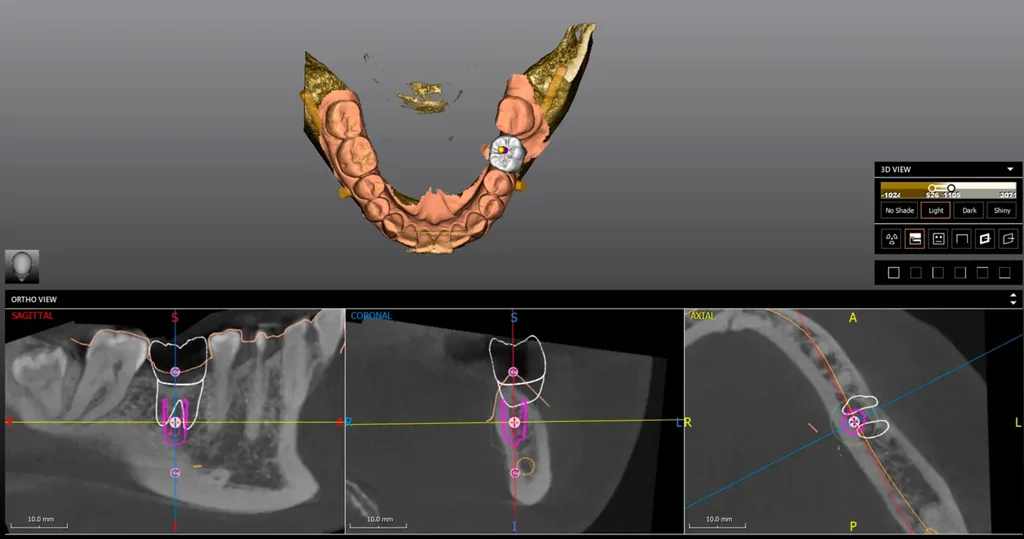
When you replace a tooth, its final shape matters. Will it meet the tooth above it comfortably? Is there room to clean beside it? We can design the replacement tooth on screen, then use a 3D X-ray of the jaw to plan an implant that supports it. These images follow one published clinical case.
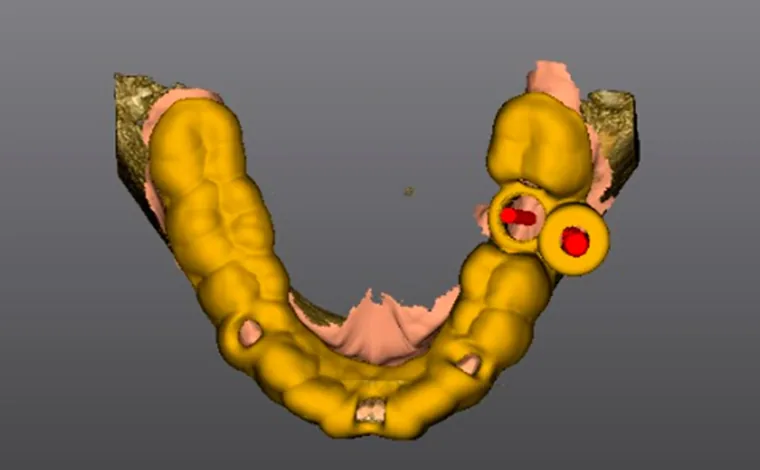
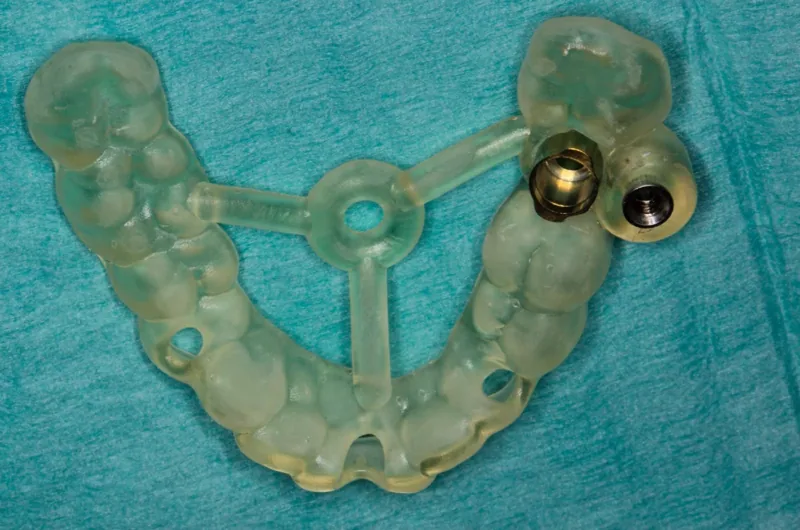
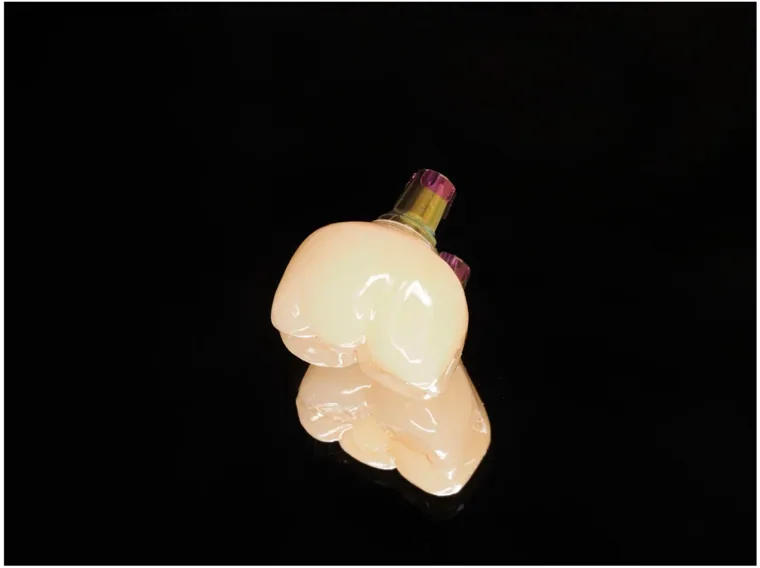
Ask us at your next visit. If you’re considering a crown, an implant or clear aligners, we’ll show you what a scan can tell us about your options.

Clinical scan, planning, guide and crown images are adapted from figures 5, 7, 8, 9 and 28 of a published case by Jakub Kwiatek and colleagues. The images were cropped and resized under CC BY 4.0.
Primescan photography and workstation image © Dentsply Sirona. See the manufacturer’s Primescan product information. The opening photo of a digital model is by Bakytzhan Baurzhanov via Pexels.